Services

Resources

Company

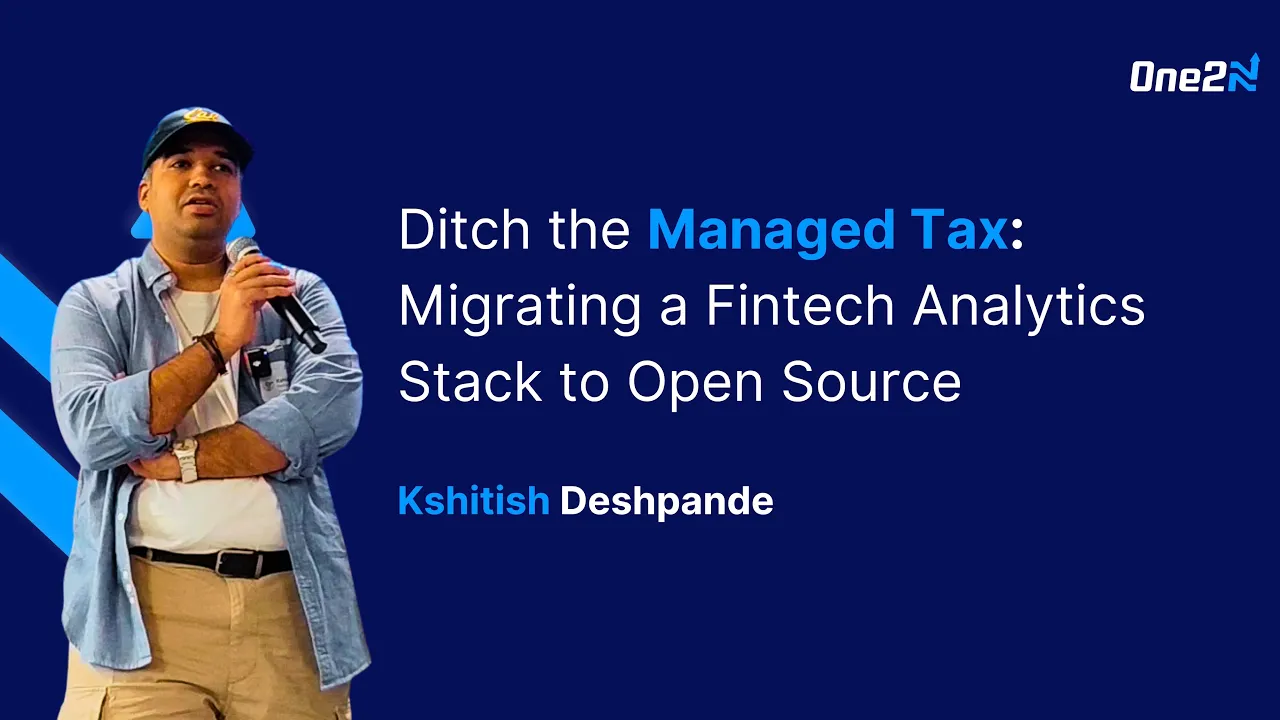
Migrating a Fintech Analytics Stack to Open Source - Kshitish Deshpande - FOSS Meetup Pune

Mar 28, 2026

Migrating a fintech analytics stack off fully managed AWS services can save serious money, but only if you do it without breaking business reporting or slowing teams down. In this FOSS Meetup Pune talk, Kshitish Deshpande (Software Engineer at One2N) walks through how his team helped a cross‑border B2B fintech processing 50–70M USD in daily transactions move from an all‑AWS analytics pipeline (Postgres, DMS, Glue, Athena, QuickSight) to a fully self‑hosted open‑source stack on ClickHouse, Pebble, Prefect, and Apache Superset. You’ll see how they planned the migration, ran both pipelines in parallel, and gave business teams the same dashboards while cutting infra costs dramatically.


Continue watching

Watch Talk

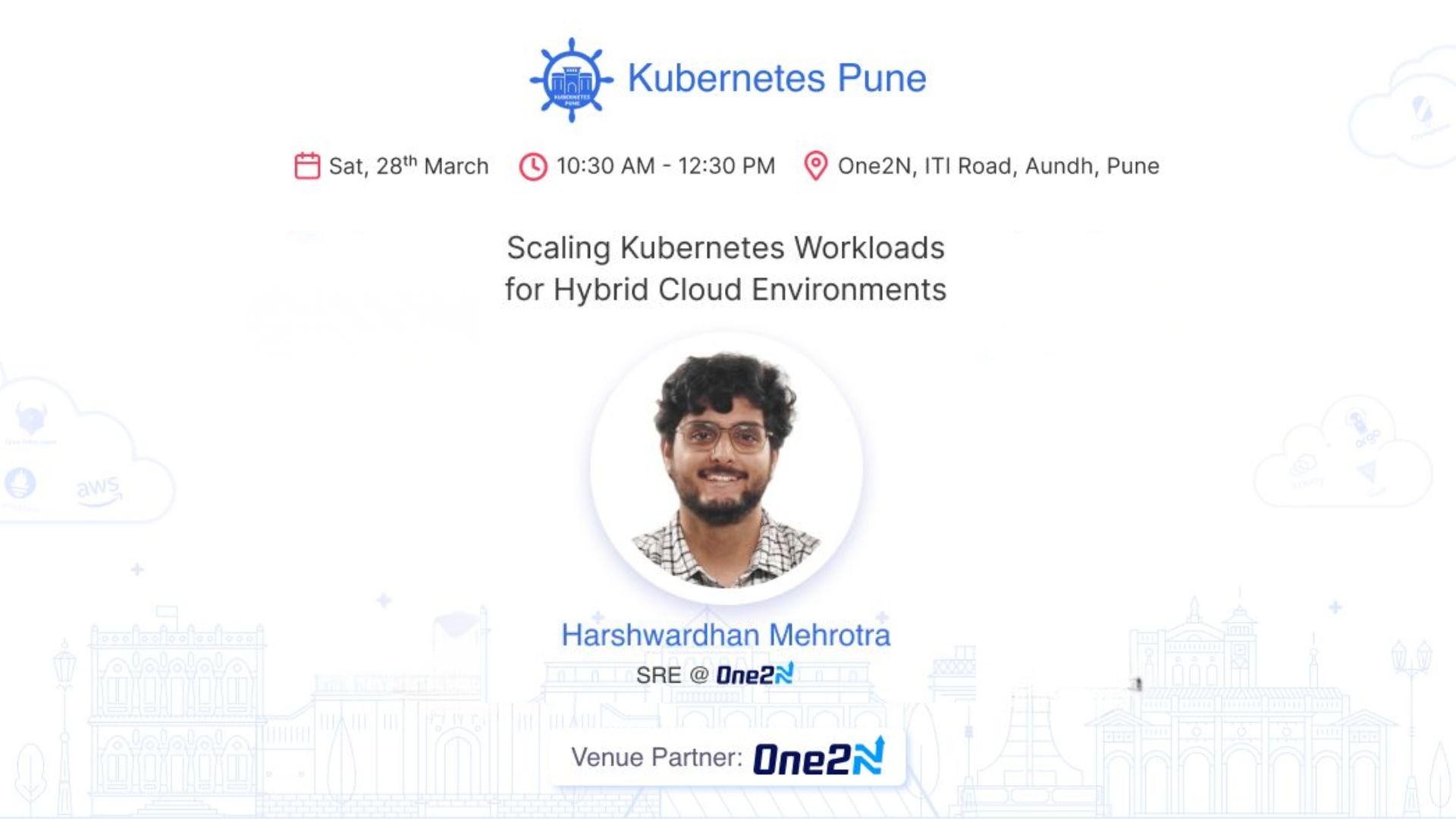
Kubernetes for Hybrid Cloud Environments - Harshwardhan Mehrotra - #60 Kubernetes Pune Meetup

Harshwardhan Mehrotra

SRE @One2N

Scaling Kubernetes workloads across 40+ data centers is hard – especially when you must meet strict data residency and latency requirements while still leveraging the public cloud. In this talk from the Kubernetes Pune Meetup, Harshwardhan Mehrotra (Site Reliability Engineer at One2N) walks through how his team designed and operated an EKS hybrid setup for a large betting platform with data centers across the US, UK, and Europe. You’ll see how they connected on‑prem worker nodes to an AWS EKS control plane, handled networking at scale, and kept the developer experience close to a “normal” EKS cluster. What you’ll learn: - Why EKS hybrid was chosen over fully on‑prem or fully cloud, and how regulatory and latency constraints shaped the architecture. - How to design pod vs node networking, routable vs non‑routable pod networks, and when to bring in BGP. - How to connect 40+ data centers to AWS using Direct Connect / site‑to‑site VPN and Cilium/Calico CNIs. - How to expose apps using F5 and Istio/NGINX ingress when ALB is not an option. - Real‑world issues with DNS (CoreDNS, Route 53 limits, node‑local DNS) and traffic distribution, plus how they fixed them. - Lessons on egress control, firewall bottlenecks, add‑on placement (Argo CD, KEDA, Prometheus, etc.), and building repeatable playbooks for on‑prem nodes. - This talk is ideal for platform engineers, SREs, and architects running Kubernetes across data centers and cloud, or evaluating EKS hybrid for regulated workloads.

March 28, 2026 | 40 min

Watch Talk

Kubernetes for Hybrid Cloud Environments - Harshwardhan Mehrotra - #60 Kubernetes Pune Meetup

Harshwardhan Mehrotra

SRE @One2N

Scaling Kubernetes workloads across 40+ data centers is hard – especially when you must meet strict data residency and latency requirements while still leveraging the public cloud. In this talk from the Kubernetes Pune Meetup, Harshwardhan Mehrotra (Site Reliability Engineer at One2N) walks through how his team designed and operated an EKS hybrid setup for a large betting platform with data centers across the US, UK, and Europe. You’ll see how they connected on‑prem worker nodes to an AWS EKS control plane, handled networking at scale, and kept the developer experience close to a “normal” EKS cluster. What you’ll learn: - Why EKS hybrid was chosen over fully on‑prem or fully cloud, and how regulatory and latency constraints shaped the architecture. - How to design pod vs node networking, routable vs non‑routable pod networks, and when to bring in BGP. - How to connect 40+ data centers to AWS using Direct Connect / site‑to‑site VPN and Cilium/Calico CNIs. - How to expose apps using F5 and Istio/NGINX ingress when ALB is not an option. - Real‑world issues with DNS (CoreDNS, Route 53 limits, node‑local DNS) and traffic distribution, plus how they fixed them. - Lessons on egress control, firewall bottlenecks, add‑on placement (Argo CD, KEDA, Prometheus, etc.), and building repeatable playbooks for on‑prem nodes. - This talk is ideal for platform engineers, SREs, and architects running Kubernetes across data centers and cloud, or evaluating EKS hybrid for regulated workloads.

March 28, 2026 | 40 min