Services

Resources

Company

Using LLMs to Improve Incident Response Times | mitramadal.ai - 2025

Dec 6, 2025

mitramandal is an AI meetup by One2N where engineers share how they've actually integrated AI into their daily development workflows. every developer is solving applied AI differently: some are orchestrating agentic pipelines across MCPs, others are wiring real-time RAG loops into Cursor or Claude, and more are operationalizing multimodal copilots inside CI/CD. we've seen fine-tuning flywheels, retrieval sandboxes, and autonomous evaluation harnesses that ship to prod every week.

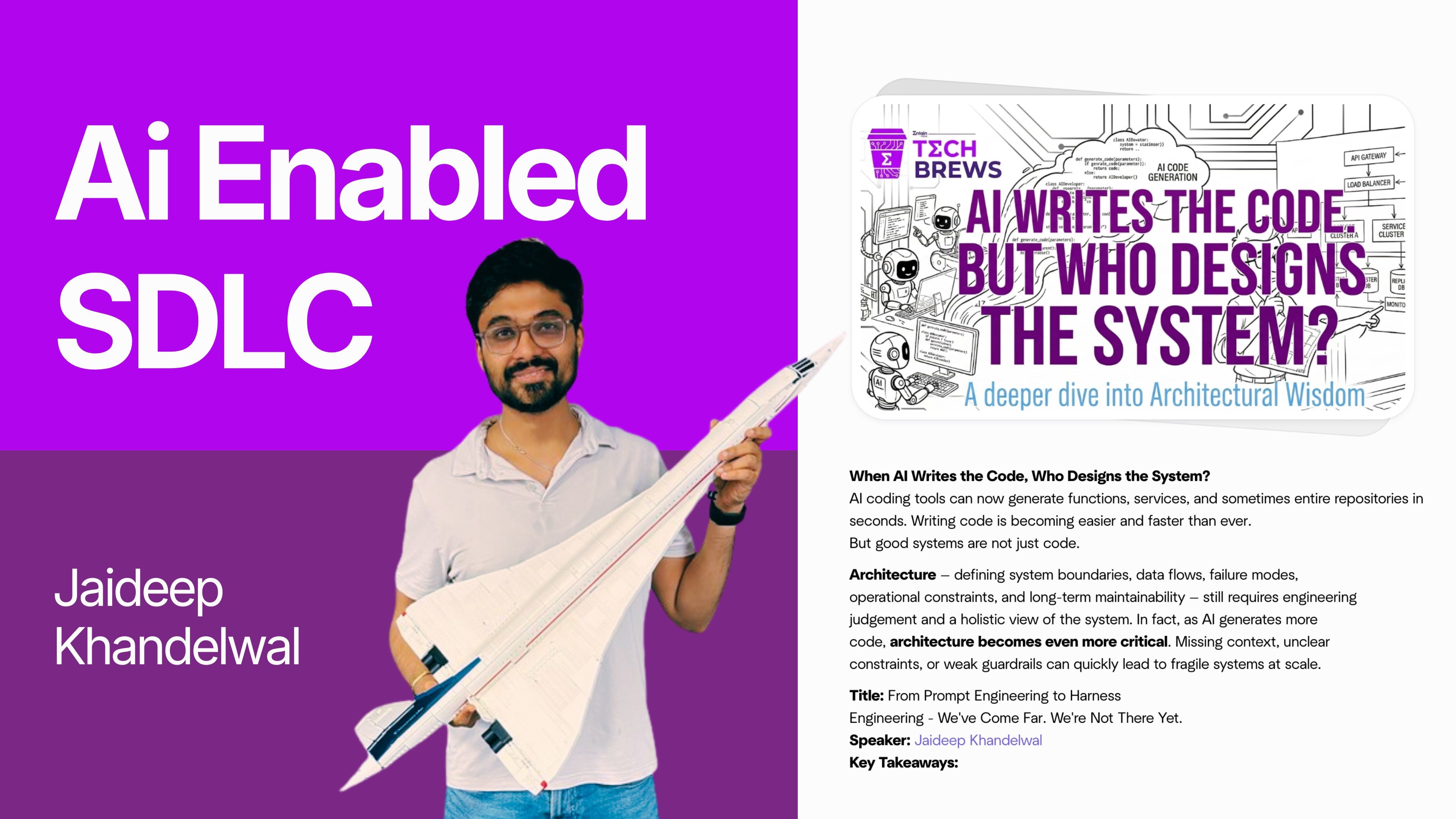
Talk 1: Using LLMs to Improve Incident Response Times - Jaideep Khandelwal : https://youtu.be/f_nV4GyWO0k?si=Zt_PnLzongzt4E9q

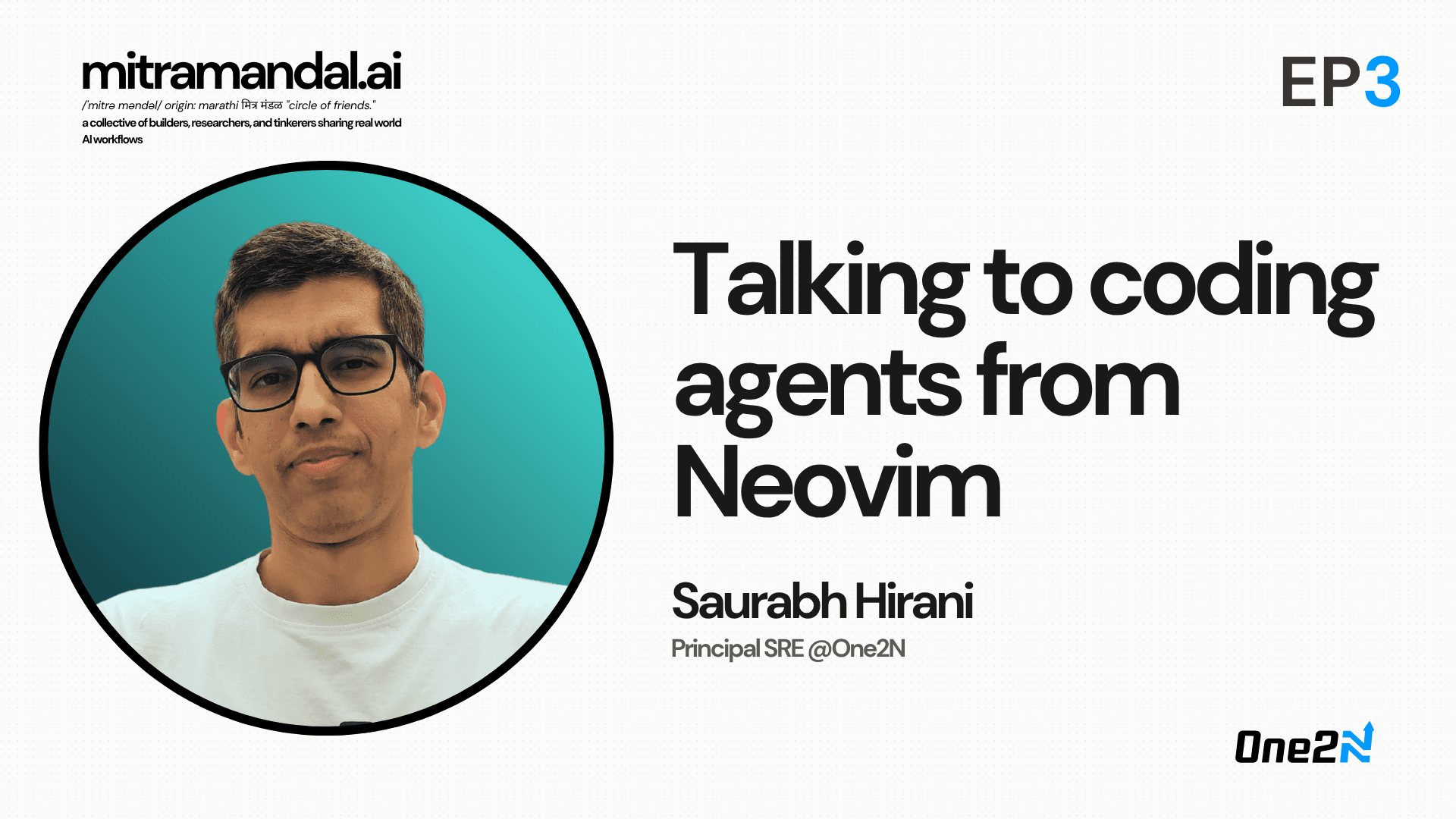
Talk 2: The long way to production - Aditya Kasibhatla : https://youtu.be/SWW9rEzgxvA?si=Tr_Z_hz0gAb0JAqd

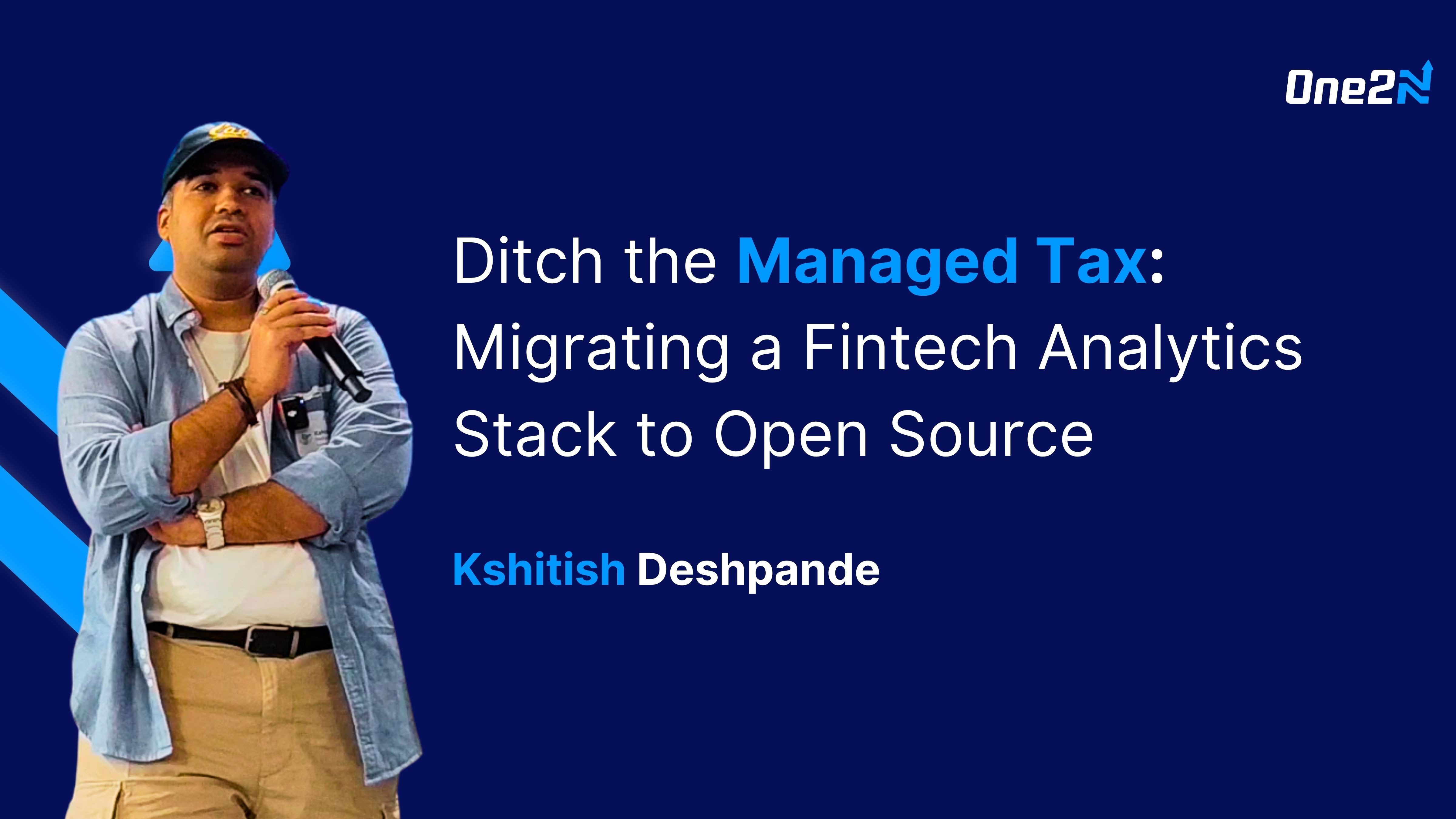
Talk 3: vMCP LEGO blocks for AI workflows and agents - Shiladitya Banerjee : https://youtu.be/Fi8j3NG7WYA?si=xHRJwandjrJLUo0N


Continue watching

Watch Talk

Kubernetes for Hybrid Cloud Environments - Harshwardhan Mehrotra - #60 Kubernetes Pune Meetup

Harshwardhan Mehrotra

SRE @One2N

Scaling Kubernetes workloads across 40+ data centers is hard – especially when you must meet strict data residency and latency requirements while still leveraging the public cloud. In this talk from the Kubernetes Pune Meetup, Harshwardhan Mehrotra (Site Reliability Engineer at One2N) walks through how his team designed and operated an EKS hybrid setup for a large betting platform with data centers across the US, UK, and Europe. You’ll see how they connected on‑prem worker nodes to an AWS EKS control plane, handled networking at scale, and kept the developer experience close to a “normal” EKS cluster. What you’ll learn: - Why EKS hybrid was chosen over fully on‑prem or fully cloud, and how regulatory and latency constraints shaped the architecture. - How to design pod vs node networking, routable vs non‑routable pod networks, and when to bring in BGP. - How to connect 40+ data centers to AWS using Direct Connect / site‑to‑site VPN and Cilium/Calico CNIs. - How to expose apps using F5 and Istio/NGINX ingress when ALB is not an option. - Real‑world issues with DNS (CoreDNS, Route 53 limits, node‑local DNS) and traffic distribution, plus how they fixed them. - Lessons on egress control, firewall bottlenecks, add‑on placement (Argo CD, KEDA, Prometheus, etc.), and building repeatable playbooks for on‑prem nodes. - This talk is ideal for platform engineers, SREs, and architects running Kubernetes across data centers and cloud, or evaluating EKS hybrid for regulated workloads.

Watch Talk

Kubernetes for Hybrid Cloud Environments - Harshwardhan Mehrotra - #60 Kubernetes Pune Meetup

Harshwardhan Mehrotra

SRE @One2N

Scaling Kubernetes workloads across 40+ data centers is hard – especially when you must meet strict data residency and latency requirements while still leveraging the public cloud. In this talk from the Kubernetes Pune Meetup, Harshwardhan Mehrotra (Site Reliability Engineer at One2N) walks through how his team designed and operated an EKS hybrid setup for a large betting platform with data centers across the US, UK, and Europe. You’ll see how they connected on‑prem worker nodes to an AWS EKS control plane, handled networking at scale, and kept the developer experience close to a “normal” EKS cluster. What you’ll learn: - Why EKS hybrid was chosen over fully on‑prem or fully cloud, and how regulatory and latency constraints shaped the architecture. - How to design pod vs node networking, routable vs non‑routable pod networks, and when to bring in BGP. - How to connect 40+ data centers to AWS using Direct Connect / site‑to‑site VPN and Cilium/Calico CNIs. - How to expose apps using F5 and Istio/NGINX ingress when ALB is not an option. - Real‑world issues with DNS (CoreDNS, Route 53 limits, node‑local DNS) and traffic distribution, plus how they fixed them. - Lessons on egress control, firewall bottlenecks, add‑on placement (Argo CD, KEDA, Prometheus, etc.), and building repeatable playbooks for on‑prem nodes. - This talk is ideal for platform engineers, SREs, and architects running Kubernetes across data centers and cloud, or evaluating EKS hybrid for regulated workloads.